Featured
Table of Contents
Browse technology has moved far beyond the period of matching keywords to text strings. In 2026, the main objective of online search engine is to comprehend the world through entities-- unique, distinct things, individuals, places, or principles. This shift towards semantic search means that exposure in New York now depends on how well a brand name is positioned within a wider knowledge chart rather than simply the number of times a specific expression appears on a page.
Understanding Entity-Based Browse in 2026
Search engines now treat information as a series of linked nodes. When a user searches for specialized marketing help, the algorithm does not simply search for those precise words. Rather, it recognizes the intent behind the query, the area of the user in New York, and the historic context of similar searches. This process includes mapping the relationship between the service supplier and other recognized entities in the local region.
Steve Morris, CEO of NEWMEDIA.COM, has actually noted in recent industry discussions that the "identity" of a brand in the eyes of an AI is its most valuable asset. If an AI can not verify that a service is a real entity with particular attributes-- such as a physical existence in Dallas, Atlanta, or New York-- it is not likely to suggest that business in generative search results page. More organizations now prioritize Authority SEO as part of their long-lasting growth plan to guarantee these entity connections are clear and authoritative.
The Role of Semantic Triples
In the 2026 search environment, information is typically processed in triples: subject, predicate, and object. For example, "Organization X (Subject) provides (Predicate) digital strategy (Item)" When search engines find consistent triples across the web-- from social media profiles to news articles in NYC or Miami-- they build confidence in the entity. This self-confidence equates directly into higher presence in AI-generated summaries and traditional search engine result alike.
Material intelligence involves determining which triples are most relevant to a specific industry. By evaluating how competitors in New York are pointed out, organizations can discover spaces in their own entity profiles. If a rival is often associated with "sustainability" or "high-end style," and those are valued characteristics in the understanding graph, a brand name must actively work to develop those same semantic links through its material strategy.
Content Intelligence and the RankOS Platform
Data-driven decision-making has become the requirement for keeping search prominence. Platforms like RankOS have actually changed how companies monitor their existence by moving far from easy rank tracking. Rather, these systems evaluate "search share of model"-- the frequency and sentiment with which an AI model discusses a brand name when asked about marketing solutions in New York.
This type of intelligence permits a more granular method to content production. Rather of guessing which subjects may perform well, brand names can see which entities are currently trending in the understanding chart for the surrounding area. If there is a rise in interest relating to ecommerce combination in LA or Chicago, the platform determines the associated entities-- such as specific software application, logistics companies, or regulative bodies-- that ought to be discussed along with the primary service to construct topical authority.
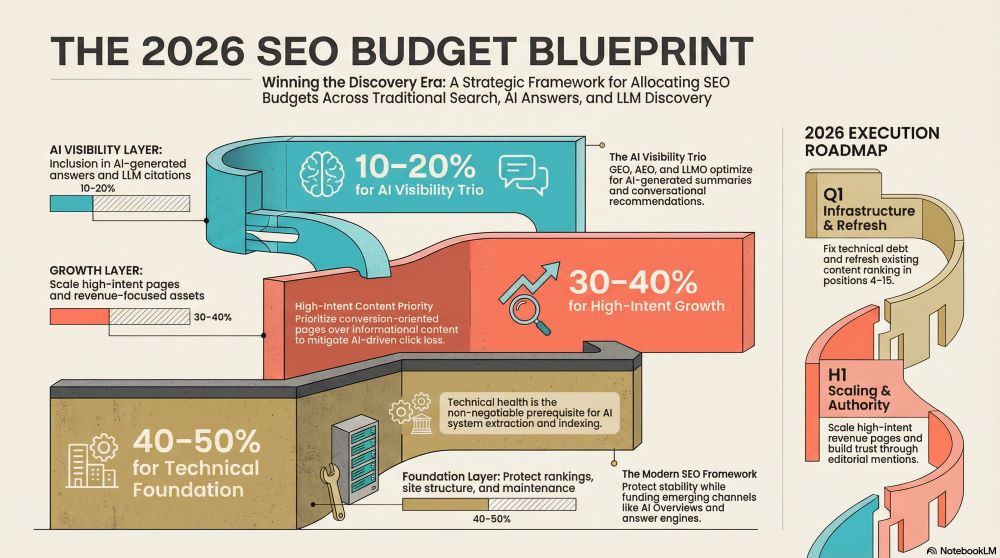
New RankOS Framework stays a main chauffeur of organic traffic in competitive markets where easy keyword optimization no longer yields outcomes. Success in 2026 needs a deep understanding of how these various data points converge to form a cohesive brand story that AI search engines can easily absorb and classify.
AI Browse Optimization (AEO) and GEO
The increase of Generative Engine Optimization (GEO) has introduced brand-new requirements for content structure. AI designs choose info that exists in a manner that is simple to summarize and cite. This means using clear headings, structured data, and succinct responses to common questions. When a user in New York asks an AI for the most dependable company of professional digital work, the AI searches for "attestation"-- proof from multiple sources that confirms the service is a leader in that field.

Method in 2026 involves more than simply composing blog posts. It needs an existence across various platforms where AI designs train, consisting of industry forums, scholastic papers, and major news outlets. Steve Morris has actually emphasized that being included in high-authority publications works as a signal of trust that AI models utilize to weight their suggestions. This is particularly true for organizations operating in major centers like Nashville or New York, where the volume of completing data is high.
Structure Topical Authority in New York
Topical authority is the procedure of a brand's proficiency across an entire subject. To achieve this, content must cover the main service and all associated sub-topics. For a business using technical marketing, this might consist of comprehensive guides on data privacy, user experience, and the particular economic elements impacting the local economy.
Online search engine use these clusters of info to figure out if a website is a conclusive source. If a site just has one page about a subject, it is seen as a "thin" entity. If it has a deep library of interconnected material that referrals other known entities-- such as local landmarks in New York or widely known industry figures-- it becomes a high-confidence node. Many brand names find success by concentrating on Authority SEO in Financial Services to capture particular user intent and develop this required depth.
- Structured Data: Implementing schema markup that clearly specifies the relationship in between business and its services.
- Entity Refresh: Regularly upgrading material to show new advancements in the industry to reveal the entity is active.
- Sentiment Monitoring: Ensuring that discusses of the brand across the web are positive, as AI models think about sentiment when ranking entities.
- Area Uniqueness: Connecting the brand name to local events, organizations, and news in New York to strengthen geographical importance.
The Importance of Multimedia Entities
By 2026, search is no longer text-only. Images, videos, and even audio files are dealt with as entities. An image of a shop in New York or a video of a CEO speaking at a conference in Denver or Dallas is indexed and connected to the brand's knowledge chart. Optimizing these possessions involves more than just alt-text; it needs clear context so that AI can "see" the relationship in between the visual and the service.
For example, a video demonstrating a new marketing tool should be hosted on a page that provides a records and uses schema to connect the video to the specific service entity. This makes sure that when a user performs a visual search or asks a conversational AI for a presentation, the brand's properties are the ones chosen. The goal is to develop a multi-dimensional existence that leaves no doubt about the brand's proficiency in the region.
The Future of Material Method
As search engines end up being more conversational, the way content is written must adjust. Users in 2026 typically connect with explore voice or chat, asking complicated concerns rather than typing brief expressions. This shift prefers material that is written in a natural, reliable tone. Prevent lingo that does not contribute to the entity's clarity. Instead, concentrate on supplying direct worth that addresses the "why" and "how" behind digital trends.
Data from RankOS suggests that the most effective brands are those that treat their website as a living part of the understanding chart. They don't simply release material and leave it. They keep an eye on how their entity is being viewed in real-time and adjust their technique to fight misinformation or to capitalize on brand-new semantic connections. This proactive technique is important for staying ahead in a search environment that is continuously being recalculated by AI.
The digital company environment has actually changed. Firms that when focused exclusively on backlinks now concentrate on "entity citations" and "trust signals." Running from workplaces in LA, Miami, NYC, and New York, firms are now tasked with managing the whole digital footprint of a brand name to guarantee consistency. This consists of whatever from social networks sentiment to the accuracy of service listings in the United States.
Maintaining a strong entity existence is a constant procedure. As new services emerge and consumer habits shifts in New York, the understanding chart will develop. Brands that stay informed about these changes and use sophisticated tools to monitor their exposure will be the ones that flourish. The focus remains on clarity, authority, and the strength of the connections in between business and the world around it.

Latest Posts
Advanced Practices for Corporate Reputation Safety
Managing Corporate Reputation in An AI World
Best Media Relations Tactics for Maximum Impact